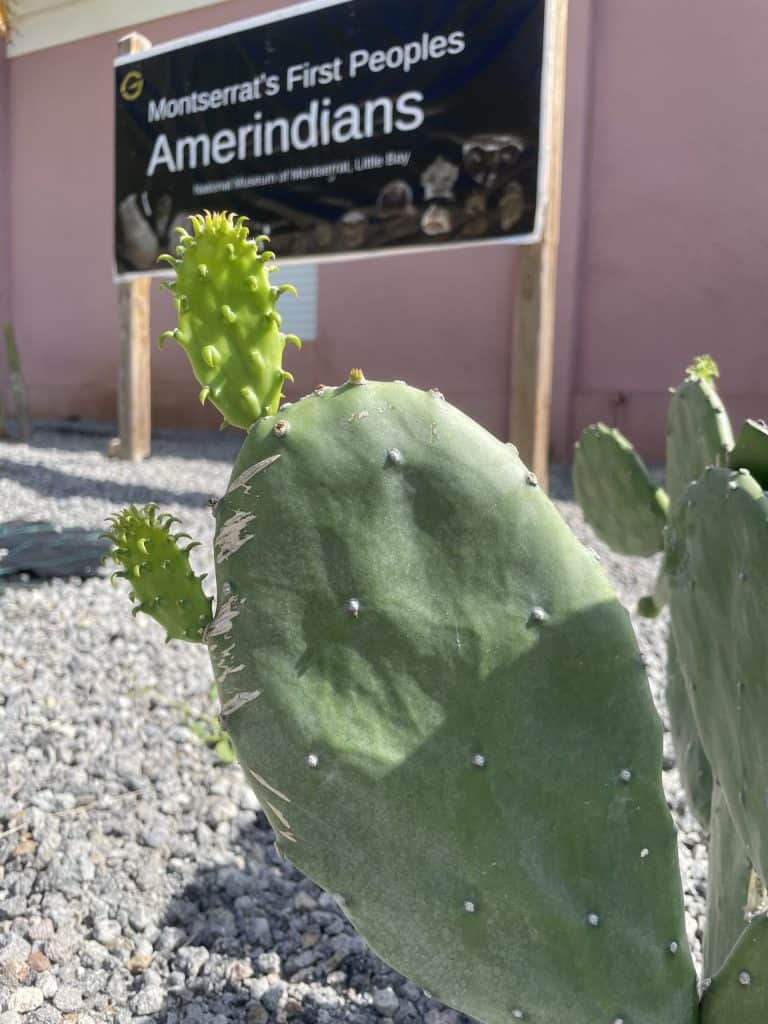
Montserrat’s landscape is one of striking contrasts, and the drier, sun-baked hillsides of the island have long been home to a resilient and fascinating array of cacti and succulents that thrive where little else can. One of the unique challenges facing conservation on Montserrat is the impact of free-roaming goats, which graze widely across the island and can devastate many plant species — but cacti and succulents, with their tough exteriors and adaptive natures, are among the few that goats simply won’t touch. This makes them not only survivors, but symbols of resilience. Recognising both the ecological significance and the practical opportunity this presented, the Montserrat National Trust set about creating a dedicated Cacti Garden — a space that authentically represents the drier side of the island and serves as an inspiring model for what can be achieved with vision, expertise, and minimal cost. MNT staff have been carefully and lovingly crafting this garden, sourcing cacti and succulents directly from the dry hillsides adjacent to the museum — an area that is notably much drier than other parts of the island and naturally rich in these remarkable plants. This painstaking work has been led by specialist botanists at the Trust, who have drawn on their deep knowledge of Montserrat’s flora to curate a collection that is both ecologically authentic and visually stunning. Careful attention has been given to drainage, with specially installed systems ensuring the plants thrive in conditions that mirror their natural habitat. Interpretation boards and displays are also being developed for the garden, telling the story of these extraordinary plants and demonstrating to visitors, schools, and communities alike just how much can be achieved on a modest budget. The Cacti Garden stands as a proud testament to the Trust’s commitment to creativity, conservation, and making the most of Montserrat’s unique natural heritage.