

Montserrat Garden Plan
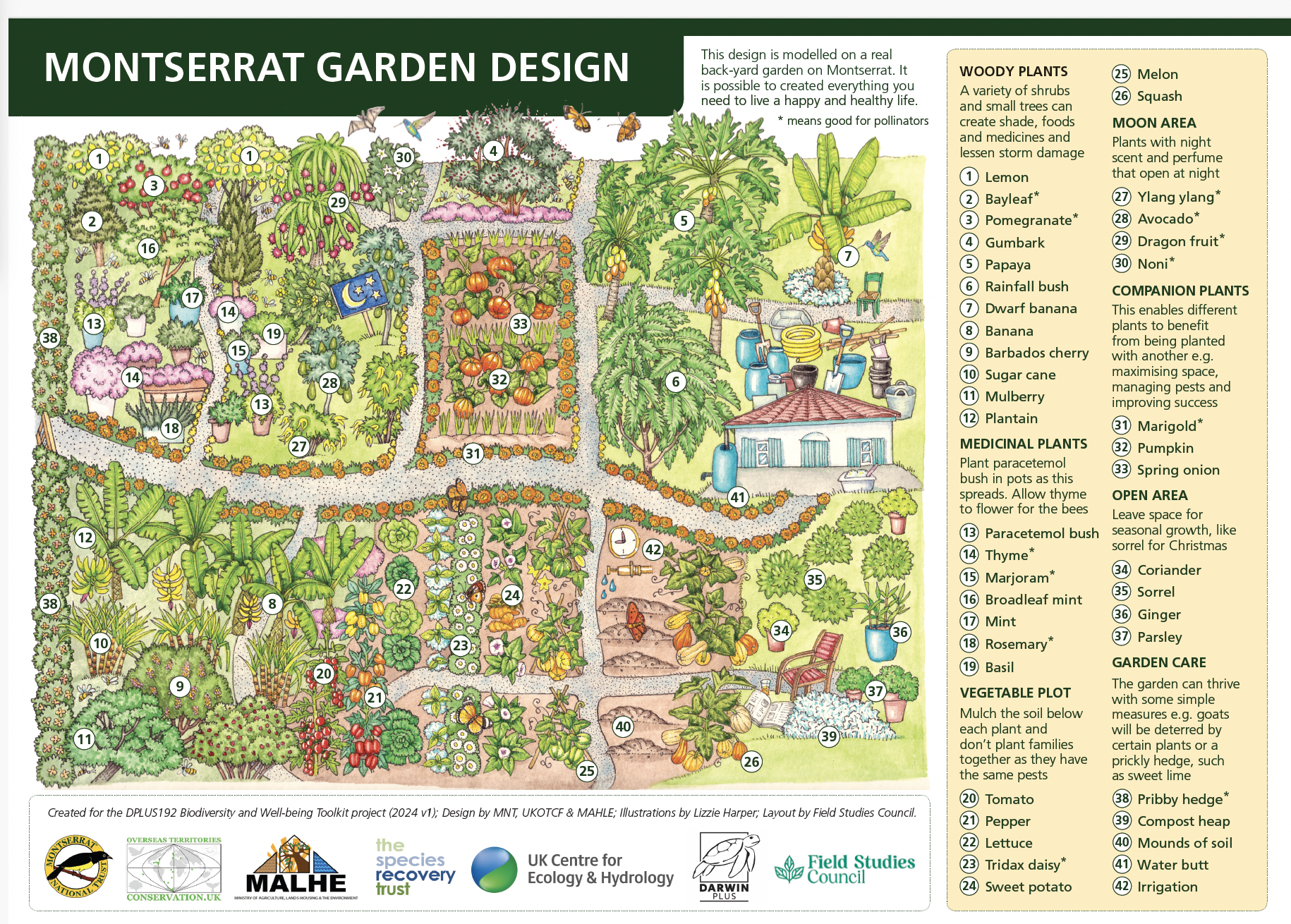
We developed a detailed garden plan inspired by Elvis Gerard’s remarkable garden, drawing on his thoughtful techniques and deep respect for nature. Over the course of severeal visits to his gardens the project team took comprehensive notes on his approach to companion planting—the careful placement of plants to support each other—and his use of integrated pest management, where natural predators, plant diversity, and cultural practices reduce the need for chemicals. These insights guided this design, which aimed to capture the harmony, resilience, and quiet ingenuity of Elvis’s work. Once the concept was drafted, we transformed our notes into a hand-drawn sketch and passed it to our colleague, artist Lizzie Harper, who beautifully brought the vision to life with her detailed illustration. Lizzie writes about this work here.
The design is shown below and looks remarkably like Elvis’ garden! The black and white version can be used as a mindfulness colouring exercise given the detail and number of different plants it includes.
Elvis’s summary of 10-point plan for creating a Biodiversity and Well-being Garden:
- Site Assessment & Design – Begin by understanding your site’s conditions, including sunlight, wind, slope, and existing features, to design a layout that works with the natural environment. You can find more information on planting for different areas on Montserrat here:
- Soil & Foundation – Build healthy soil as the foundation of your garden by improving structure, organic fertility, and organic matter to support strong plant growth.
- Water Harvesting & Irrigation – Plan how to capture, store, and efficiently use water through systems like rainwater harvesting and targeted irrigation.
- Plant Selection & Layout – Choose plants suited to your climate and conditions, and arrange them thoughtfully to maximise space, productivity, and mutual benefits.
- Planting Calendar & Succession – Organise planting times and stagger crops to ensure continuous growth and harvests throughout the year.
- Organic Maintenance – Care for your garden using natural methods such as composting, mulching, and non-chemical pest management and fertiliser.
- Harvesting & Seed Saving – Harvest crops and save seeds to preserve varieties and support future planting cycles.
- Integrating Native Biodiversity – Encourage native plants and wildlife to create a balanced ecosystem that supports pollination and natural resilience.
- Continuous Improvement – You are your own expert – by regularly observing what works in your garden you will, learn, and adapt your approach to improve productivity and sustainability over time. Keeping a journal or just a simple note book might help.
Enjoy your garden and share with others – Take time to appreciate the process and outcomes, and share knowledge, produce, and experiences with your community. Leave an old chair outside and make a point of sitting in your garden and enjoying the sounds, smells and tastes of what you have grown.